TL;DR

Get comfort and recovery gear delivered free with Prime
- Fast, free delivery on millions of items
- Prime Video, Amazon Music and more included
- Member-only deals all year
Fit&Well published a dumbbell-friendly routine built around forward, side and curtsy lunges, recommending six to eight reps per leg and two or three sets. The report says the variations work the lower body in different directions, but it does not provide research showing that this routine guarantees stronger glutes or establish that once-weekly training is sufficient for everyone.
Fit&Well has outlined a dumbbell-friendly leg routine built around forward, side and curtsy lunges, recommending six to eight repetitions on each leg and two or three sets. The report presents the sequence as a way to train the glutes and other lower-body muscles, but it does not cite evidence that doing it once a week will produce a particular strength result for every reader.
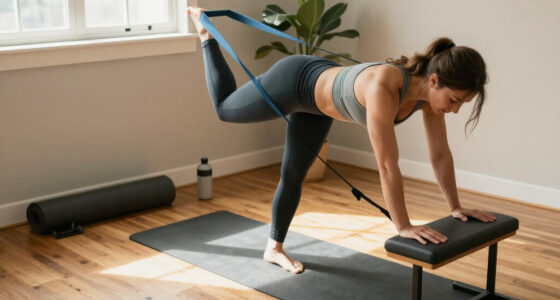
The workout pairs three lunge directions in a single routine. The forward lunge moves one foot ahead; the side lunge steps outward; and the curtsy lunge crosses one foot behind the other. Fit&Well says the variations challenge the lower body from different directions, including the gluteus maximus, gluteus medius and gluteus minimus. The report describes the maximus as the largest glute muscle, while the medius and minimus sit beneath it and contribute to hip movement and pelvic stability.
For each variation, the suggested prescription is two or three sets of six to eight reps per side. To do a forward lunge, step ahead, bend both knees while keeping the torso upright, then push through the forward foot to stand. For a side lunge, step out, bend the stepping knee and move the hips back while the other leg stays straight. For the curtsy, step one foot diagonally behind the other and lower under control before returning to standing.
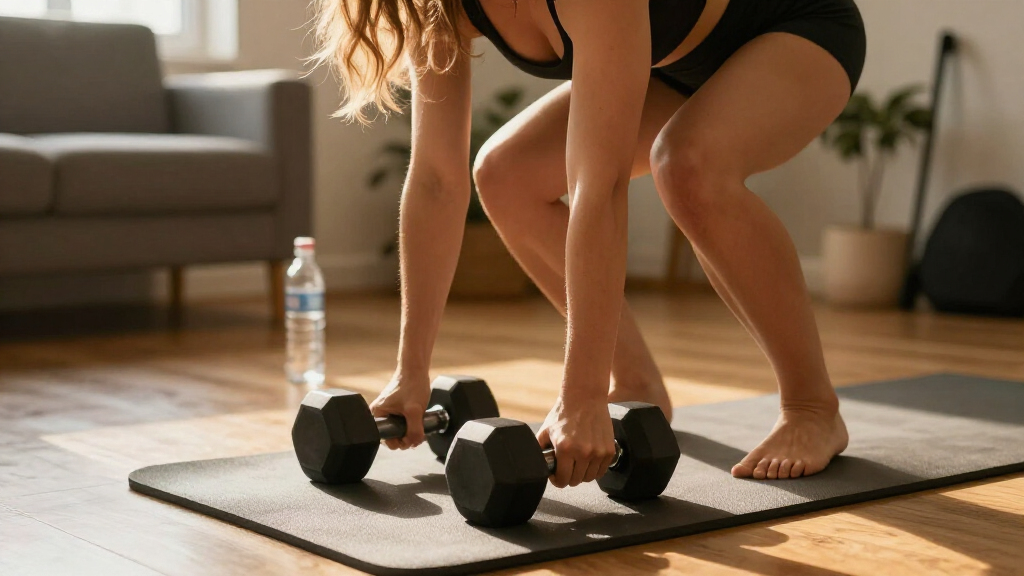
The exercises can be done with dumbbells held at the sides or shoulders, or with one dumbbell held at the chest. Fit&Well also says bodyweight is an option, with repetitions adjusted until the final few feel challenging. The report recommends a bodyweight warm-up before loaded sets and increasing weights gradually, rather than beginning with a demanding load. Readers who struggle with balance can complete all repetitions on one side before switching; otherwise, the report suggests alternating sides.
A Three-Direction Glute Session
The routine offers a compact structure for people who want to add lower-body work without relying on squats alone. Its forward, lateral and crossing steps change the direction of movement, giving readers a clear way to vary a basic lunge pattern. The report also notes that the side and curtsy variations involve muscles and ligaments around the core and lower spine, and says they load the hips and ankles in different directions.
Those are descriptions of the exercise and the author’s experience, not a clinical finding that the sequence prevents injury or treats back problems. Fit&Well’s author says the variations were helpful during recovery after a bulging-disc diagnosis, but that personal account should not be read as advice for people with back pain. Anyone with an existing injury, balance concern or medical condition should seek guidance from a qualified health professional before adding weighted lunges.
For readers, the practical value is the adjustable format: the same movements can be performed with bodyweight or dumbbells, and the suggested sets and repetitions provide a starting point. The report does not compare this plan with other programs or measure outcomes, so claims about how much strength or muscle it builds remain unquantified.
Products Worth Considering

Bose SoundLink Flex (2nd Gen) Portable Bluetooth Speaker, Black

Coway Mighty AP-1512HH(W) Air Purifier, White

Blueair Blue Pure 511i Max Smart Air Purifier
As an affiliate, we earn on qualifying purchases.
How the Lunge Plan Is Set Up
The report frames the routine as an addition to a weekly workout schedule or as a short standalone session. Its author says they sometimes perform the sequence at the end of the workday. The suggested frequency is once a week, as reflected in the headline, but the source does not explain how that frequency was selected or provide a training study supporting it.
Fit&Well’s article contrasts lunges with squats, arguing that the different directions of the three variations can recruit parts of the glutes that squats may not target in the same way. It identifies the three glute muscles and explains their general roles in hip movement and stability. That is the report’s rationale for combining the exercises; it does not establish that this is the only or best way to train those muscles.
The complete prescription is simple: warm up with bodyweight if using dumbbells, choose a load that allows controlled movement, and complete two or three sets of six to eight repetitions on each side for each lunge. The report advises gradual increases in weight over sets or weeks. It does not specify rest intervals, a progression schedule, or how to fit the routine into a broader strength program.
““Perform six to eight reps on each leg for each exercise, and complete two or three sets in total.””
— Fit&Well report
What the Workout Does Not Establish
The source does not provide a publication date in the supplied material, cite a study testing this exact workout, or report measured changes in glute strength or muscle size. It also does not explain whether one session per week is appropriate for different training levels, how long results might take, or how the routine compares with other lower-body plans. The headline’s strength-building language is the publication’s framing, not a guaranteed outcome.
Several details that can shape a training plan are absent, including rest time between sets, a schedule for increasing resistance and guidance on combining the lunges with other exercises. The report’s description of the author’s experience after a bulging-disc diagnosis is personal testimony; it does not establish that the routine is suitable for rehabilitation or for people with back conditions.
Applying the Routine Safely
The report offers no announced follow-up study or testing milestone. Readers using the plan can begin with the bodyweight version, focus on steady control and add dumbbells only when they can perform the movements comfortably. The listed starting point is six to eight repetitions per leg for each variation, repeated for two or three sets; the article advises increasing load gradually.
People who experience pain, have a known injury or are unsure whether the movements fit their health needs should consult a qualified professional before training. The routine’s effectiveness for any individual will depend on factors the report does not assess, including technique, resistance, recovery and the rest of their exercise program.
Key Questions
What exercises are in the Fit&Well workout?
The routine combines forward lunges, side lunges and curtsy lunges, performed on both legs.
How many sets and repetitions does the report recommend?
Fit&Well suggests two or three sets of six to eight repetitions per leg for each variation.
Do I need dumbbells?
No. The report says the movements can be done with bodyweight. Dumbbells can be held at the sides or shoulders, or one weight can be held at the chest.
Does the report prove that one weekly workout builds strong glutes?
No. It offers a workout recommendation but does not cite a study or present measured results showing that this exact routine, performed once weekly, guarantees stronger glutes.
What should I do if lunges affect my back or balance?
Start without weights and use a range of movement you can control. The report suggests completing repetitions on one side before switching if balance is difficult. If you have back pain, an injury or another health concern, ask a qualified professional for guidance.
Source: fitandwell.com