TL;DR
A Fit&Well report describes a trainer’s use of the suitcase carry to work on balance, posture and core strength with clients over 50. The exercise involves holding a weight at one side while standing or walking; the report recommends reducing the load or starting with a stationary hold if form is difficult.
Fit&Well has reported on a trainer’s use of the suitcase carry, a one-sided weighted exercise intended to challenge balance, posture and core stability in clients over 50. The movement can take about a minute, but the report says beginners who have trouble staying upright can start by standing still with a lighter weight rather than walking.
The suitcase carry is performed by holding a weight in one hand and walking for 20 to 30 seconds, then changing hands. The Fit&Well report says the weight’s pull to one side requires the person to resist leaning while moving. It describes one to three sets as a suggested range, though it does not provide research evidence or a formal training plan supporting that dosage.
Physical therapist Dr. Sean Sullivan, identified in the report as the owner of SpineScottsdale, says the exercise challenges several abilities at once. The report quotes him describing demands on grip, core stability, posture, balance and walking. That is his assessment of the movement, not a claim that the exercise prevents falls or treats a health condition.
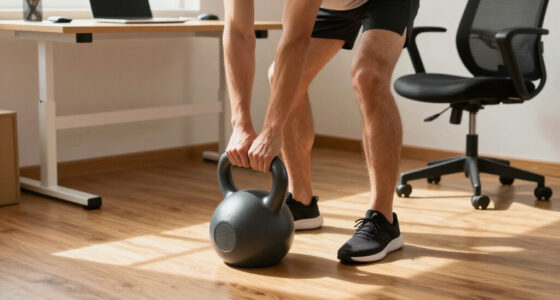
The report’s instructions start with feet about hip-width apart and a weight on the floor beside the exerciser. The person braces their core, bends at the hips and knees to pick up the weight, stands, then walks while carrying it. If maintaining an upright position is difficult, the report advises using less weight. The trainer also describes beginning with a stationary, one-handed hold, then adding a shorter 10- to 20-second walk once the person can hold the weight upright for at least 30 seconds.
A Short Exercise With Easier Starting Options
The report’s practical point is that the exercise can be scaled: a person does not have to begin by walking with a heavy load. A stationary hold offers a simpler version, while reducing the weight can help preserve an upright position. Those options may make the movement easier to adapt to a person’s current ability, though the report does not establish that it is suitable for everyone over 50.
That distinction matters because balance and strength exercises involve individual physical capacity, and carrying a weight can create a risk of losing balance or aggravating an existing problem. People with pain, a history of falls, significant balance difficulty or other health concerns should seek guidance from a qualified health professional before trying it. The report does not quantify outcomes or compare the carry with other exercises, so its benefits should be understood as the trainer’s rationale rather than a measured result.
weighted suitcase carry exercise equipment
As an affiliate, we earn on qualifying purchases.
As an affiliate, we earn on qualifying purchases.
How the Carry Is Modified
The report presents the suitcase carry as one of several possible at-home core exercises, focusing on its asymmetrical load: unlike holding a weight with both hands, the person carries it on one side. The suggested task is to remain upright as the load pulls laterally, first while standing and then, if able, while walking. The article does not identify a specific weight to use, a progression schedule beyond the described adjustments, or how often to train.
Sullivan’s main form warning is to avoid choosing a weight that causes the body to lean. The trainer’s modification follows the same principle: remove the walking demand at first, then bring it back for less time. The report also mentions a more challenging variation—briefly lifting one leg during steps—but does not present it as a starting option. That variation adds a balance demand and should not be attempted by someone who cannot safely manage the basic version.
dumbbell for balance and core strength
As an affiliate, we earn on qualifying purchases.
As an affiliate, we earn on qualifying purchases.
Evidence and Individual Suitability
The supplied report does not state its publication date, provide studies measuring the exercise’s effects, or say whether the trainer’s clients experienced specific improvements. It also does not specify an appropriate starting weight or explain how to assess whether someone is ready to progress from a stationary hold to walking.
It remains unclear how the exercise should be adjusted for people with mobility limitations, pain, a history of falls or medical conditions. The brief instruction to lift one leg for up to 10 seconds with each step is not accompanied by a detailed safety assessment. Readers should not treat the report as an individualized exercise prescription.
lightweight kettlebell for seniors
As an affiliate, we earn on qualifying purchases.
As an affiliate, we earn on qualifying purchases.
Choose the Version You Can Control
Anyone considering the exercise should begin with a load they can hold without leaning and use a stable, clear walking area if adding movement. The report’s progression is to start with a stationary hold when needed, work toward maintaining upright form for at least 30 seconds, and then try a shorter walk before extending it toward 20 to 30 seconds. Stop if the movement causes pain, dizziness or unsafe instability.
The source material describes the trainer’s approach but gives no announcement of further research, official guidance or follow-up results. For people who are unsure whether the carry is appropriate, a qualified exercise professional or health clinician can advise on modifications suited to their balance and health needs.
As an affiliate, we earn on qualifying purchases.
Key Questions
What is a suitcase carry?
It is an exercise in which a person holds a weight in one hand and walks while trying to stay upright. The Fit&Well report suggests switching hands after 20 to 30 seconds.
How can a beginner modify the exercise?
The report describes starting with a lighter weight and holding it while standing still. The trainer says walking can be added later for a shorter 10- to 20-second interval if the person can maintain an upright position.
How much weight should I use?
The report does not give a specific weight. Sullivan’s advice is to avoid a load that makes you lean to one side; choose a lighter weight if you cannot stay upright.
Is the exercise proven to improve balance or posture?
The report presents the exercise as a way to challenge balance, posture and core stability, including Sullivan’s assessment. It does not provide outcome data showing measured improvements or establish that the exercise prevents falls.
Should everyone over 50 try it?
No. The report does not establish that the carry is suitable for everyone. People with balance problems, pain, a history of falls or relevant health conditions should seek professional guidance before trying a weighted exercise.
Source: rss