TL;DR
A Fit&Well report describes two balance drills recommended by coach Yancy Culp: very slow walking and slow high knees. The report gives daily practice instructions, but it does not cite a controlled study or quantify the exercises’ effects; people should use support if they feel unsteady.
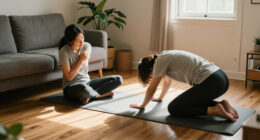
Fit&Well has reported two balance drills recommended by Yancy Culp, a Spartan DEKA co-creator and senior director: walking very slowly to extend time on each foot, and raising the knees at a controlled pace. The exercises are presented as ways to practise balance and coordination, with difficulty increased gradually.
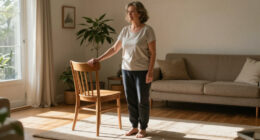
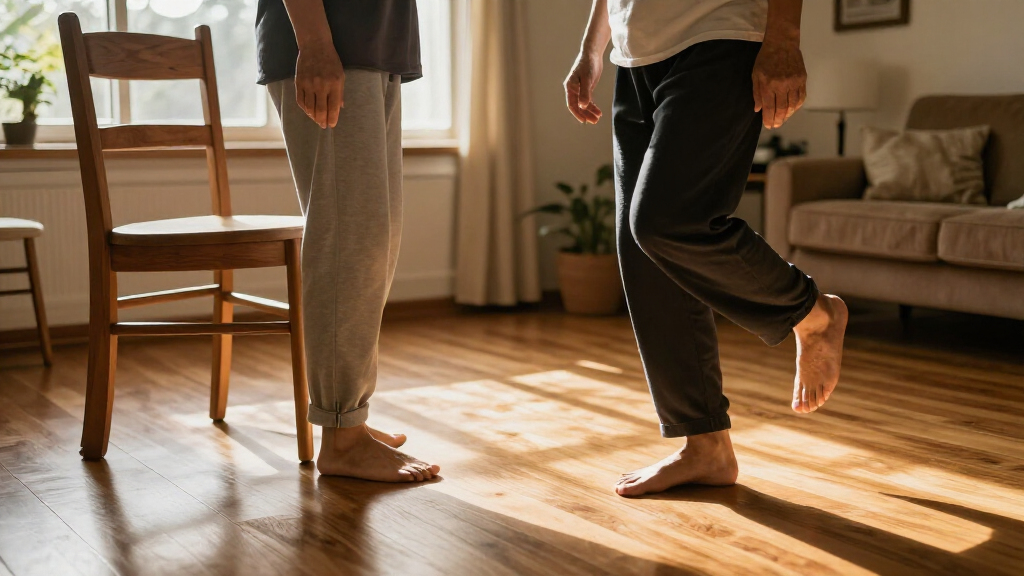
Culp’s first drill, which he calls delayed walking, uses an ordinary walk as a balance exercise. He advises walking slowly enough to spend longer balancing on one foot as weight shifts between steps. The report says to practise for several minutes each day and gradually increase the time spent in each step transition. It does not prescribe a starting duration for each transition.
The second drill is a slowed-down version of high knees. Culp recommends raising one knee and taking three seconds to complete the movement before returning the foot to the ground, then continuing for two minutes daily. His proposed progression is to add one second to the leg cycle every fifth day. The report says the routine would reach 10-second cycles after 35 days.
Culp also suggests optional challenges, including briefly closing the eyes or reaching down to touch the raised foot with both hands. Those additions make the task harder; they are not required steps for beginners. The report provides no clinical testing, comparison group or measured outcome for either drill, so its instructions should be understood as coaching advice rather than proof of a specific result.
Practice Balance in Everyday Movement
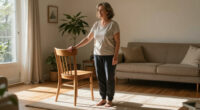
Balance supports ordinary movements such as walking, dressing and reaching, and a loss of steadiness can affect confidence in those activities. The drills offer a low-equipment way to practise weight shifts and single-leg control, skills involved in everyday movement. Culp says balance becomes more important with age and that regular practice can help; the source does not provide research data showing how much these exercises reduce falls or improve function.
For readers, the useful point is that balance practice can be scaled rather than treated as an all-or-nothing test. A person who cannot comfortably stand on one foot may begin with a slow, supported version of walking or knee lifts, then progress only if the movement feels controlled. Anyone with a history of falls, dizziness, pain or a health condition affecting mobility should seek advice from a health professional before attempting more challenging variations.
balance training exercises for seniors
As an affiliate, we earn on qualifying purchases.
As an affiliate, we earn on qualifying purchases.
Culp’s Five Fitness Checks
The Fit&Well report places one-leg balance within a set of five fitness checks described by Culp. It says the other checks address cardio fitness, strength and mobility, though it does not list all five in detail. Standing on one leg while carrying out a task, such as putting on a shoe, is presented as a practical way to notice whether balance and coordination may need attention—not as a formal diagnosis.
The report also includes the writer’s personal experience: after finding it difficult to put on a sock and shoe while standing, the writer practised putting on socks on one leg and reported improvement over several months. That account is anecdotal and should not be treated as evidence that the same timeline or result will apply to everyone. Culp’s drills are offered as alternatives for people who are not yet comfortable with one-leg standing.
“Balance is one of the clearest indicators of how well the body is functioning day to day.”
— Yancy Culp, as quoted by Fit&Well
supportive walking shoes for balance
As an affiliate, we earn on qualifying purchases.
As an affiliate, we earn on qualifying purchases.
Evidence and Safety Limits
The source does not identify a publication date for the report, cite a controlled study of these specific drills or provide measured results. It is not clear how much improvement a typical person might experience, how long it might take, or whether the suggested schedule is suitable for people with different ages, abilities or health conditions. Culp’s forecast that the drills will improve balance is an attributed coaching claim, not a quantified finding in the material provided.
The report also does not set out modifications for people who feel unstable. Since slow walking and one-leg knee lifts can still pose a fall risk, practise near a stable counter or another secure support, use clear floor space and stop if pain, dizziness or marked unsteadiness occurs. The eyes-closed and reach-down challenges should not be attempted by someone who cannot perform the basic movement safely.
As an affiliate, we earn on qualifying purchases.
Begin With Supported Repetitions
The report’s next step for readers is consistent, gradual practice: try slow walking for a few minutes or use controlled knee lifts, and increase the challenge only when the movement remains steady. For the high-knee schedule, Culp proposes two minutes a day and an extra second per leg cycle every fifth day, but the source does not establish that this timetable is appropriate for everyone.
Readers seeking a plan tailored to their balance, mobility or medical circumstances should ask a qualified health professional or physiotherapist. The source material does not announce further testing or follow-up findings, so whether the two drills produce measurable benefits remains unreported.
As an affiliate, we earn on qualifying purchases.
Key Questions
What are the two balance drills?
Delayed walking means walking slowly to spend more time balancing on each foot. Slow high knees means lifting a knee and taking a controlled amount of time to complete each cycle.
How often does Culp recommend practising?
For delayed walking, Culp advises several minutes each day. For slow high knees, he recommends two minutes daily, with gradual increases to the cycle time. These are coaching instructions reported by Fit&Well, not a schedule validated in the source by a clinical study.
Should beginners close their eyes during the drills?
No. Closing the eyes is described as an optional challenge, not a starting requirement. Anyone who feels unsteady should keep their eyes open, use a stable support and avoid harder variations.
Do the drills prevent falls?
The report does not establish that these specific exercises prevent falls. It presents them as practice for balance and coordination; it provides no measured fall-risk outcomes or controlled-study results.
Source: rss