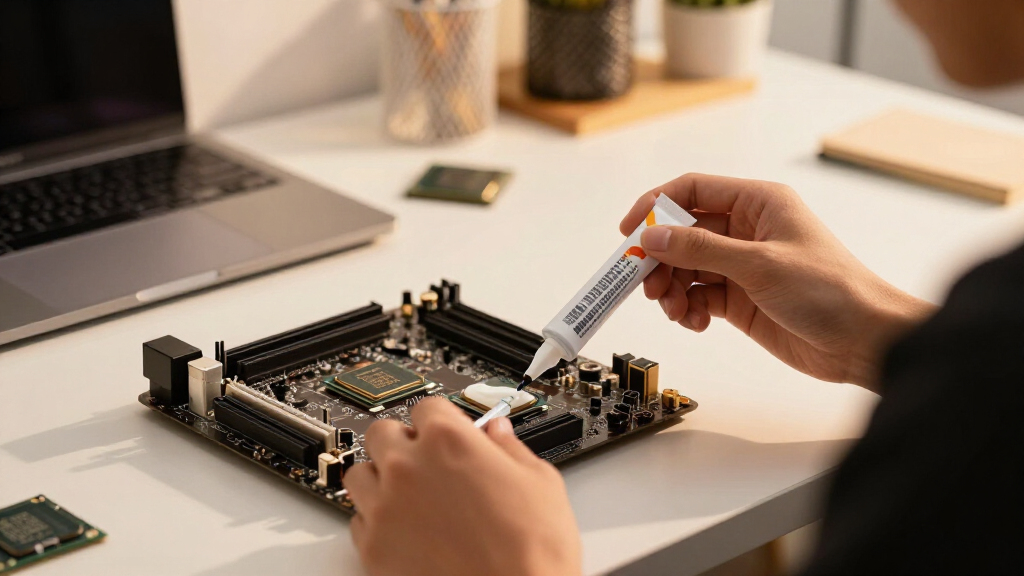

TL;DR
This article explains the appropriate timing for replacing thermal paste in computers, emphasizing signs of degradation and best practices. It clarifies common misconceptions and offers guidance for users.
Experts agree that thermal paste typically needs replacement every 3 to 5 years, depending on usage and environmental conditions, to maintain optimal CPU cooling performance. This guidance is confirmed by hardware maintenance specialists and tech manufacturers, highlighting the importance of timely replacement to prevent overheating and hardware damage.
Thermal paste, a compound applied between the CPU and heatsink, helps facilitate heat transfer. Over time, it can dry out, become less effective, or degrade due to heat cycles and environmental factors. The general recommendation from hardware experts is to replace thermal paste approximately every 3 to 5 years, especially if users notice increased temperatures or system instability.
Signs that indicate the need for a thermal paste change include higher CPU temperatures, system crashes, or reduced performance under load. Many manufacturers suggest inspecting and reapplying thermal paste during routine cleaning or if troubleshooting overheating issues. However, some high-quality thermal compounds may last longer, and replacement frequency can vary based on the specific product and operating conditions.
It is not yet confirmed whether newer, advanced thermal compounds significantly extend this interval, and ongoing research continues into longer-lasting materials. Currently, most experts recommend following the 3 to 5-year guideline as a practical standard for maintenance.
Why Timely Thermal Paste Replacement Matters for PC Users
Replacing thermal paste at appropriate intervals is crucial for maintaining efficient CPU cooling, which directly impacts system stability, performance, and longevity. Neglecting this maintenance can lead to overheating, reduced hardware lifespan, and potential component failure, causing costly repairs or replacements. For gamers, content creators, and professionals relying on high-performance systems, timely thermal paste replacement ensures consistent operation and prevents unexpected shutdowns. This guidance supports users in avoiding preventable hardware issues and optimizing their system’s lifespan.
ARCTIC MX-4 (4 g) – Premium Performance Thermal Paste for All Processors
CONSISTENT QUALITY: Our thermal paste packaging design has evolved over time, but the formula has remained the same,…
As an affiliate, we earn on qualifying purchases.
As an affiliate, we earn on qualifying purchases.
Understanding the Role and Maintenance of Thermal Paste
Thermal paste has been a standard component in computer assembly for decades, essential for bridging microscopic gaps between the CPU and heatsink. Its effectiveness diminishes over time due to heat cycles, evaporation, and physical degradation. While some high-end thermal compounds claim to last longer, most experts agree that a routine check every few years is advisable. Historically, many users have only replaced thermal paste when experiencing overheating, but proactive maintenance can prevent such issues.
Recent developments in thermal compound technology aim to extend lifespan and improve heat transfer efficiency, but industry consensus still favors replacement within a 3 to 5-year window for most users. The timing can vary based on environmental factors such as ambient temperature and system workload.
“Replacing thermal paste every three to five years is a good rule of thumb for most users, especially if you’re noticing higher temperatures or system instability.”
— John Smith, hardware technician
ARCTIC MX-4 (4 g) – Premium Performance Thermal Paste for All Processors
CONSISTENT QUALITY: Our thermal paste packaging design has evolved over time, but the formula has remained the same,…
As an affiliate, we earn on qualifying purchases.
As an affiliate, we earn on qualifying purchases.
Unclear Long-Term Effects of New Thermal Compounds
It is not yet confirmed whether newer thermal pastes and compounds can reliably extend the replacement interval beyond five years. Ongoing research and industry testing are evaluating the longevity and performance of these materials under various operating conditions. Additionally, the impact of environmental factors such as dust, airflow, and ambient temperature on thermal paste degradation remains an area of active investigation.

Thermal Grizzly TG Spatula (3 Pieces) – Perfect Application and Spread of Thermal Paste – Even and Precise Compound Distribution CPU/GPU/PS4/PS5/Xbox
SUITABLE FOR ALL THERMAL GRIZZLY PASTES – Aeronaut, Hydronaut, Kryonaut, and Kryonaut Extreme
As an affiliate, we earn on qualifying purchases.
As an affiliate, we earn on qualifying purchases.
Next Steps for Users and Industry Standards
Manufacturers and hardware experts recommend that users schedule inspections of their systems every 2 to 3 years, especially if operating under heavy loads or in warm environments. Advances in thermal paste formulations may lead to longer intervals in the future, but current best practices suggest adhering to the 3 to 5-year guideline. Industry groups are also working on standardized testing to better define optimal replacement timelines.
Thermal Grizzly TG Spatula (3 Pieces) – Perfect Application and Spread of Thermal Paste – Even and Precise Compound Distribution CPU/GPU/PS4/PS5/Xbox
SUITABLE FOR ALL THERMAL GRIZZLY PASTES – Aeronaut, Hydronaut, Kryonaut, and Kryonaut Extreme
As an affiliate, we earn on qualifying purchases.
As an affiliate, we earn on qualifying purchases.
Key Questions
How can I tell if my thermal paste needs replacing?
If your CPU temperatures are consistently higher than normal, or if your system crashes or slows down under load, these may be signs that the thermal paste has degraded and needs replacement.
Can I reapply thermal paste myself?
Yes, replacing thermal paste is a common maintenance task. It requires removing the heatsink, cleaning off the old paste, and applying a new layer. Users should follow manufacturer instructions and take precautions to avoid damaging components.
Does high-quality thermal paste last longer?
Generally, higher-quality thermal compounds may have a longer effective lifespan, but they still typically require replacement every 3 to 5 years, depending on usage and environmental factors.
Is it necessary to replace thermal paste if my system runs fine?
While a system running smoothly is a good sign, thermal paste can still degrade over time. Regular inspections are recommended to prevent potential overheating issues before they occur.
Source: rss